Colour under wild light.
The light your subject was standing in has a colour. That colour is the mood — and it's the last thing you want to correct away.
This Steller's sea eagle is lit by cold blue snow-shade, and its white feathers pick that blue up and start to look dirty. The instinct is to warm the whole frame until they're clean — but that throws the winter light out with them. Here's the same frame, and the fix that keeps both.
Warm the subject, one step at a time.
Same frame. Only the eagle's colour moves — the snow is left alone.
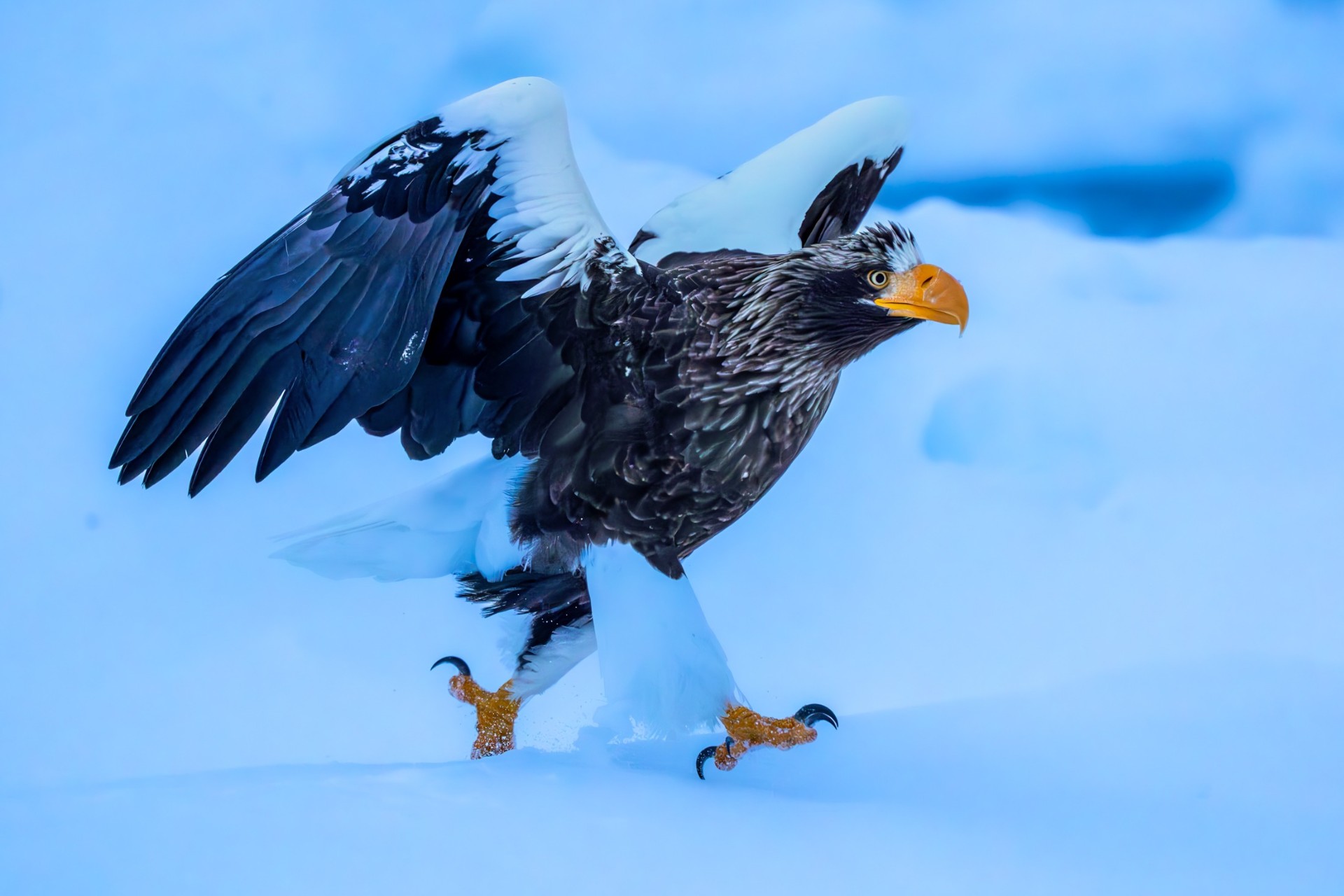
This is it. The eagle's whites are clean and the beak reads true orange again — while the snow keeps its cold blue mood.
Light has a colour — keep it
The cast on the whole scene is the mood: dawn gold, snow blue, forest green. Correct it away and you correct away the moment.
Clean the subject, not the scene
Neutralise the colour where it matters — on the subject — and leave the ambient light alone. Local, not global.
Anchor on a known colour
The eye forgives a coloured scene as long as one thing it knows — a white feather, an orange beak — reads true. Fix that, and the mood is free to stay blue.
Correct the subject, not the whole frame.
Tap to neutralise the whole image the way auto white balance would.
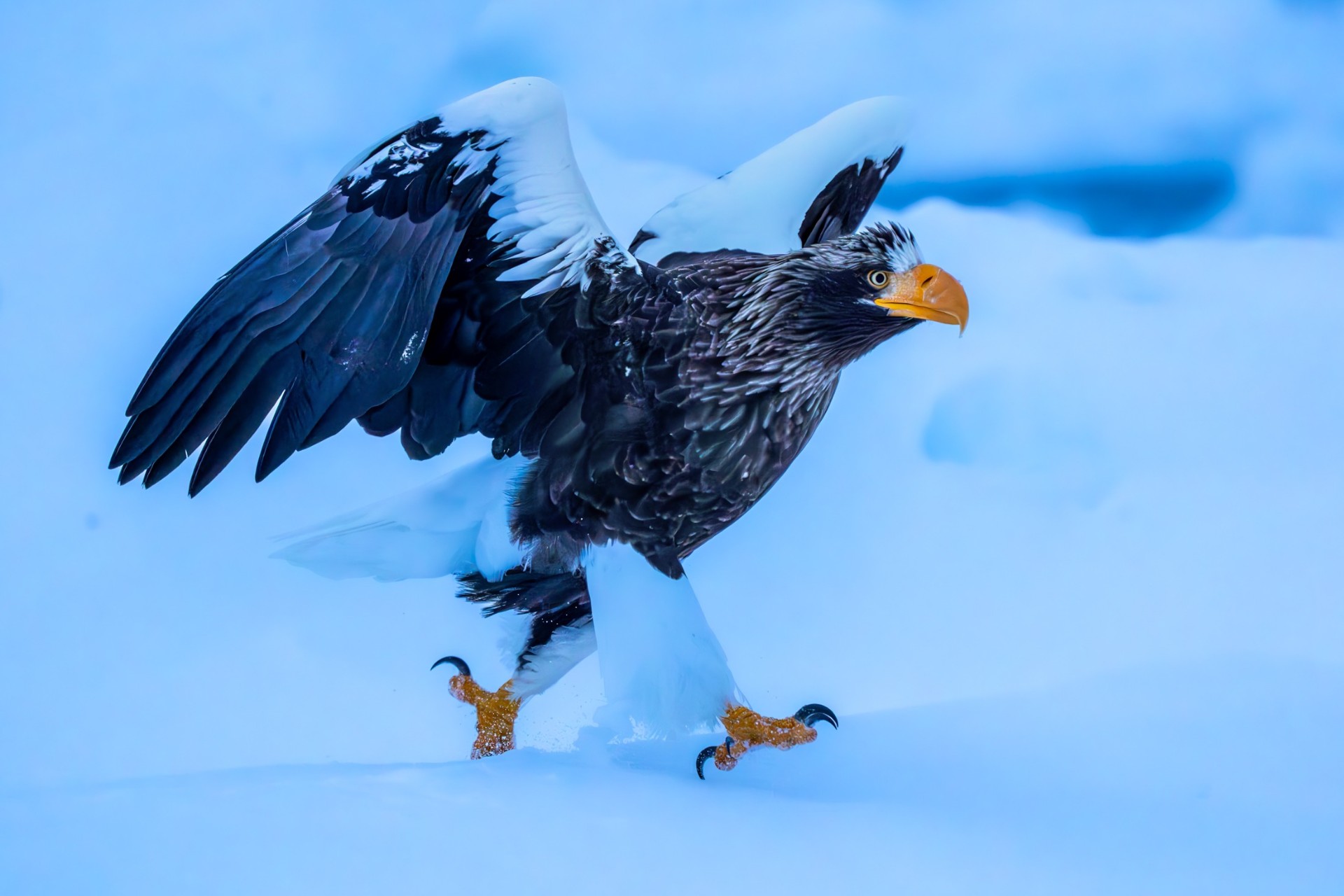
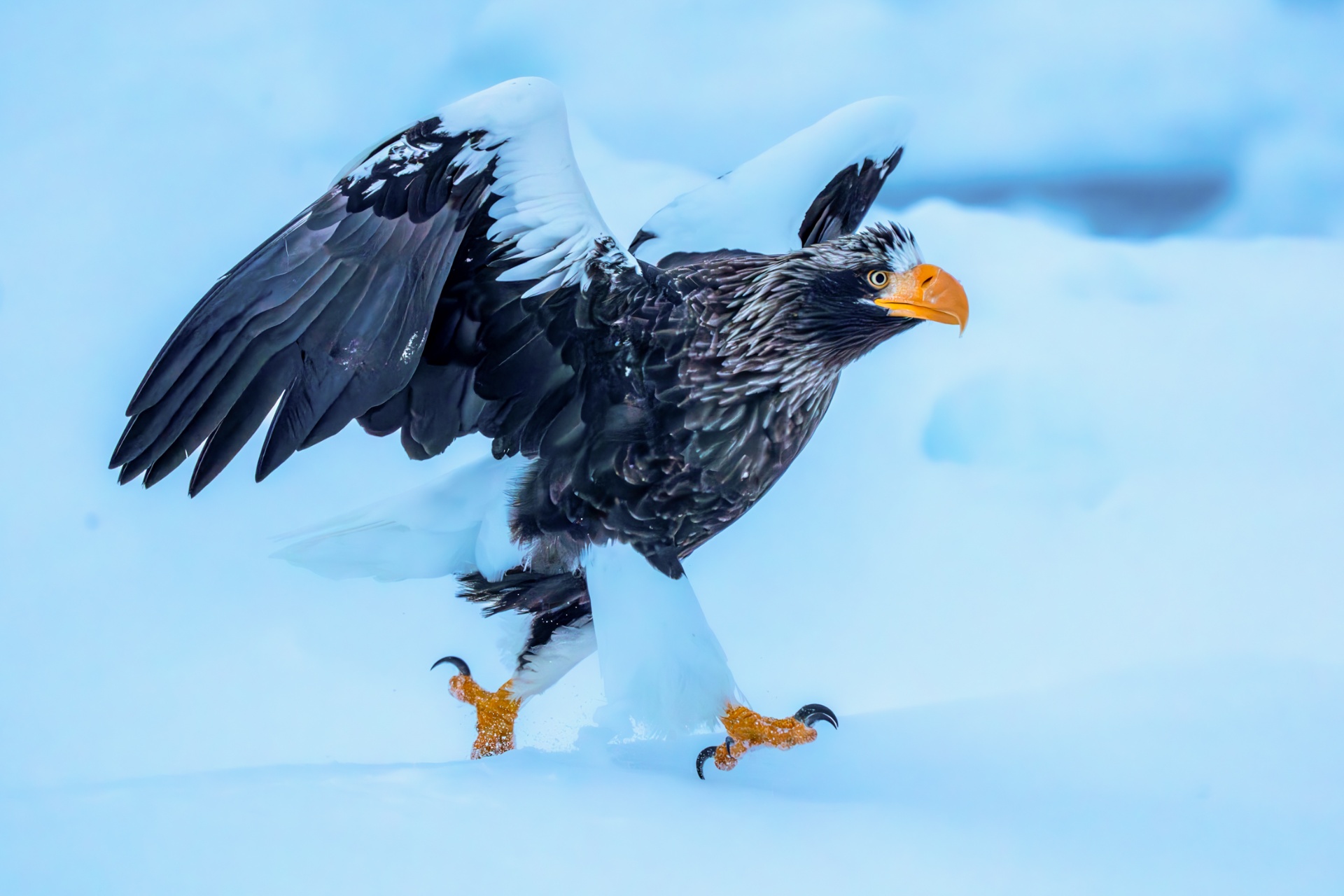
"Auto white balance corrects the whole photo. The photograph was in the part you'd have left alone."
Read the correction.
Tap each mark.
Split the colour.
- Open a frame shot in strongly coloured light — dawn, shade, snow, canopy.
- Mask the subject and neutralise its white balance until its known colours read true.
- Leave the background's colour exactly as the light made it.
- Export both. Keep the one where the subject looks right and the light still has a mood.
If the fix made the subject honest and the scene still felt like that morning — you corrected the colour, not the light.