Watch how a film introduces its hero. Early on, the camera looks down on them — small, one of the crowd. By the end it has dropped to their eye and below, and the hero towers.
A wild subject works the same way. Shoot down and it's a specimen on the ground, one detail among many. Get to its eye level — or under it — and it becomes the hero of the frame, lifted out of its world by nothing but the height of your lens.
Shoot down, or drop to its level.
Tap to put the lens on the ground.
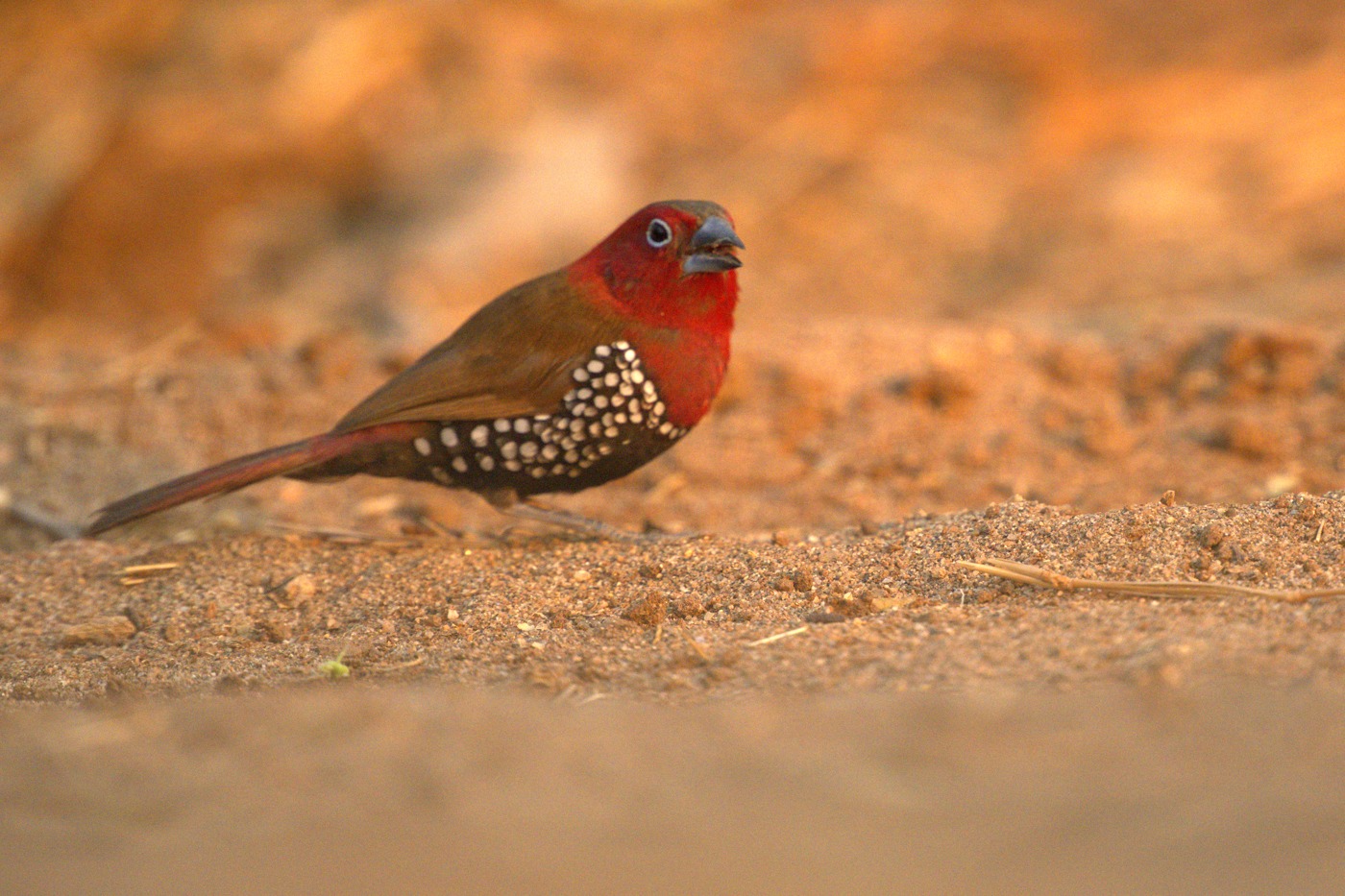
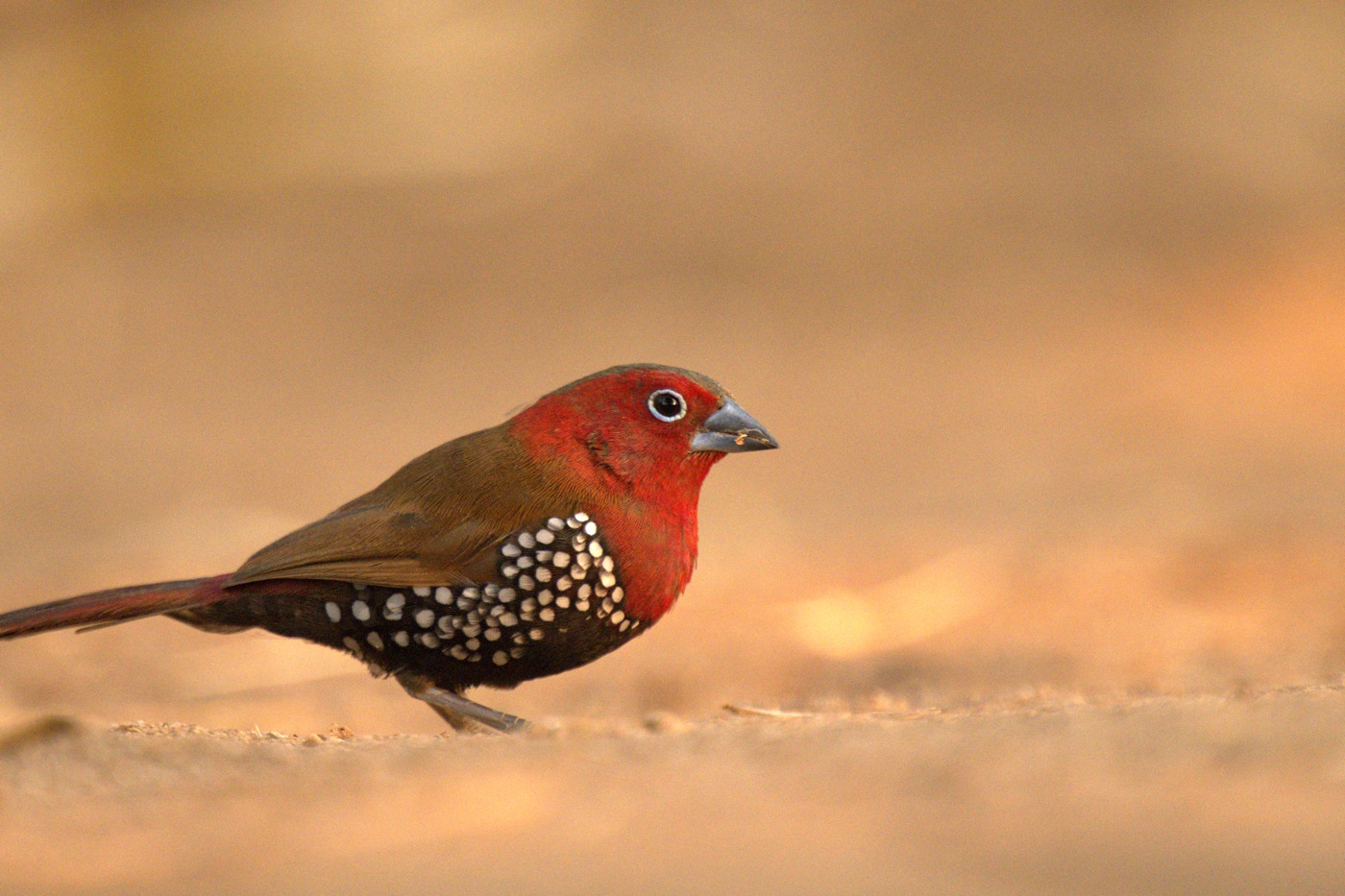
Same bird, same light, minutes apart. The first is shot from standing height, looking down — a clean record, but the ground is right there with it and the eye wanders the whole scene. Drop the lens to the earth and the near ground and the far ground both melt to nothing; the twinspot lifts off the blur and becomes the only thing in the world. Its red throat and spotted flanks are the whole portrait now — there's nothing else left to look at.
"Shoot down and you photograph an animal. Get to its level and you photograph a character."
What the ground gave you.
Tap each mark.
Lower than feels sensible.
Eye level with a bird on the ground means your lens in the dirt — so you have to work for it.
- Lie flat behind the camera — knees, elbows, chin in the ground.
- Or rest the camera straight on the earth and compose off the tilt screen, so the lens sits at pebble height.
- From a vehicle, hang a monopod upside-down out of the window and fire with a remote trigger.
- And don't shoot down unless down is the story — a nest, a pattern, a trail. Otherwise, get low.
Put the lens on the ground.
- Find a subject on the ground or the water — a bird, a lizard, a cub.
- Shoot your usual standing frame, then get the lens down to its eye or lower — by whatever means it takes.
- Put the two side by side at home.
- Notice which one makes the animal look like it matters.
If dropping the camera a foot turned a record into a portrait — that foot was the whole photograph.