Everything in this frame is hidden but two shapes and a thread of light. That's not a failed exposure — it's a choice to show less.
The temptation with a scene like this is to lift the shadows until you can see the baboons — the faces, the fur, the ground. Do it, and the mystery leaves with the darkness. Withhold instead: give the animals to shape, keep only the rim of light that draws their edge, and let the black hide everything that doesn't matter.
Brighten it, or give it to the dark.
Tap to lift the shadows the way instinct wants.
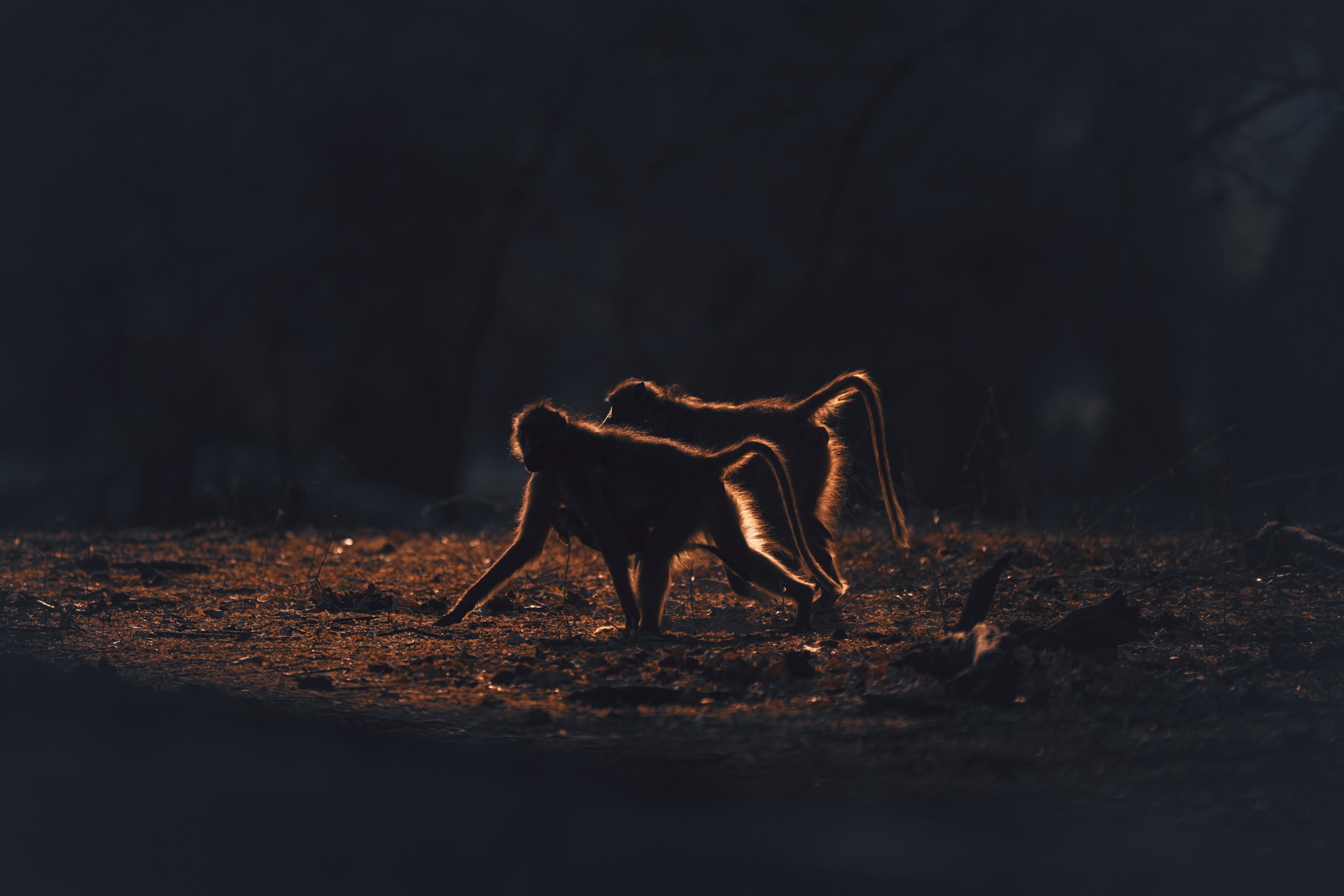
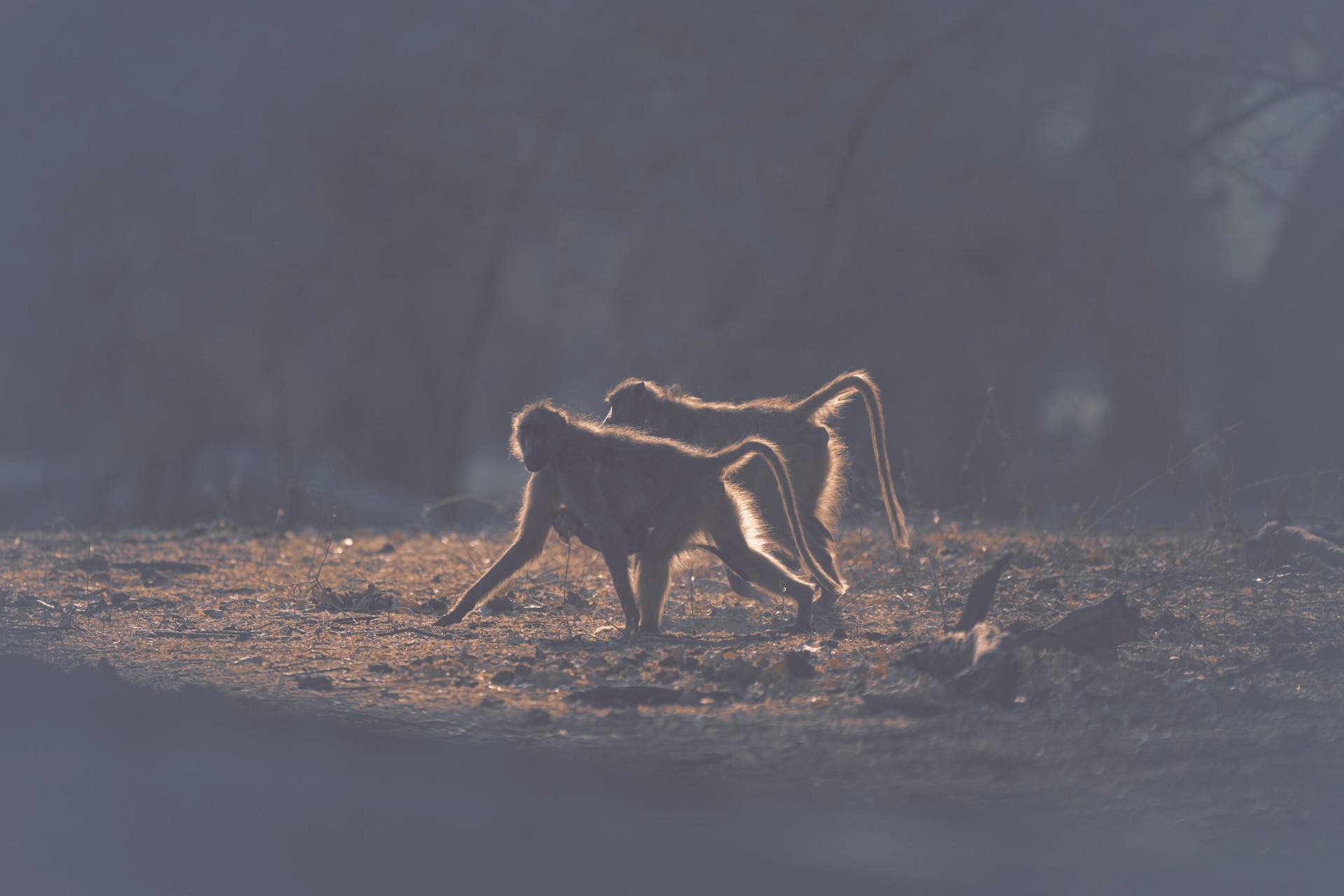
Brightened, you can finally see them — two baboons on open ground, a competent record of a moment. But the spell is gone: the eye now has fur, faces, twigs, a whole dull scene to wander. Held dark, there's nowhere to look but the shapes and the light on their backs. Less to see — and far more to feel.
"You don't always have to show the animal. Sometimes the shape is the whole story."
What the black kept, and hid.
Tap each mark.
Less, on purpose.
Reach for the dark when the light is already doing the separating — a subject rimmed or backlit against shadow, a shape strong enough to read without detail. Expose for the brightest edge and let everything under it fall. The question stops being "can I see the animal?" and becomes "do I need to?"
Underexpose on purpose.
- Find a subject with light on its edge and shadow behind it — dawn, dusk, a shaft through trees.
- Meter for the rim or the bright background, then take it down another stop. Let the subject go to shape.
- Resist every urge to lift the shadows afterward.
- Keep the frame that makes you feel the animal without quite showing it.
If the darker frame said more with less — you didn't lose the detail, you chose to.