Field Guide 02 · Central America

You don't visit Costa Rica.
You go to make ten photographs.

A photographer's plan for the cloud forest and the rainforest floor — the frogs, the flight, the jewels in the dark, and the light you bring to make them.

One of three guides we built by hand.
scroll

Forget the species list. Costa Rica's gift is not how many you can tick, but how few you can truly make — a red-eyed frog on black, a hummingbird frozen mid-wing, the slit eye of a caiman. The magic here is small, and it comes out in the wet and the dark. Come with ten pictures in mind, and let the forest hand you the ones it chooses.
The maker's reframe
Chase the conditions, not the animals
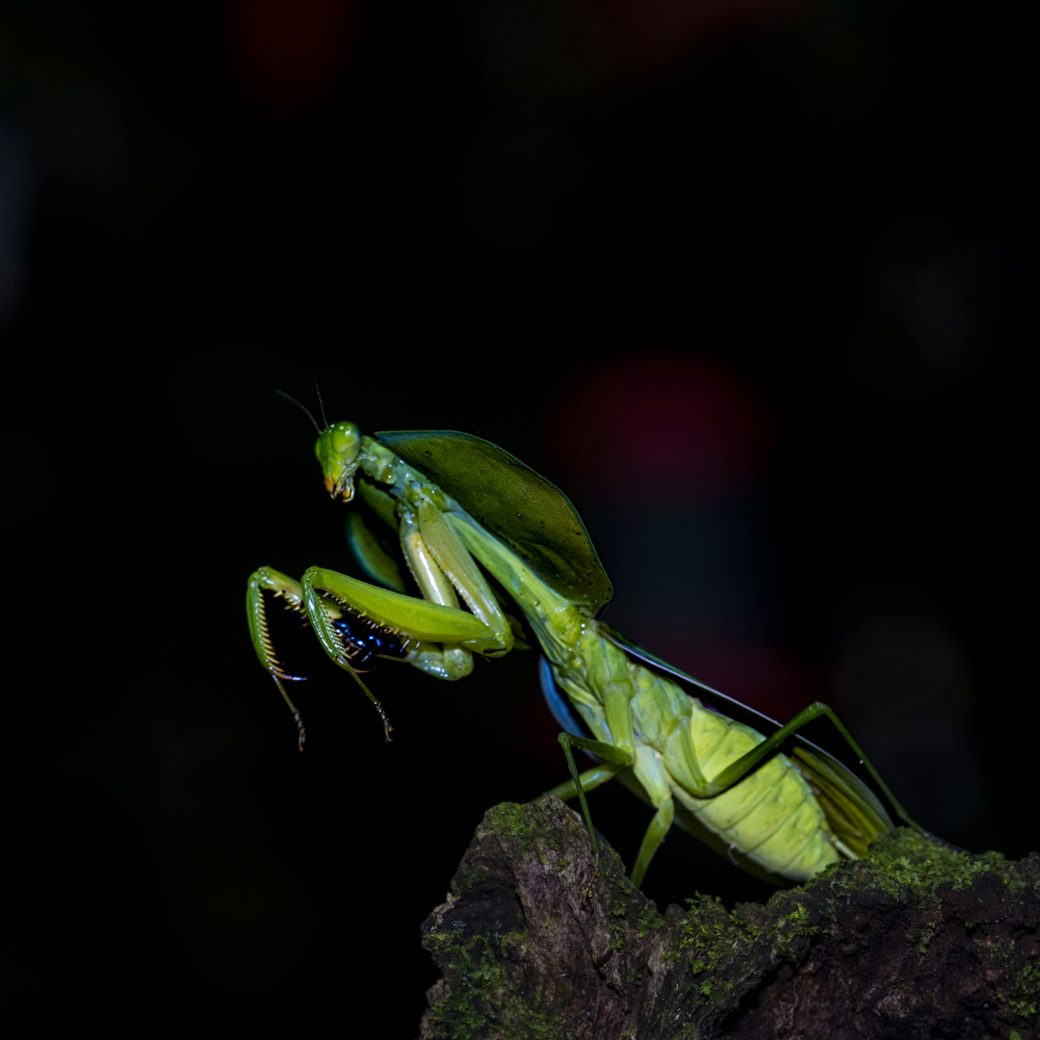
In the rainforest you do not chase golden light — there rarely is any. You chase the wet, the dark, and the light you bring. The frame is made on a black canvas, by rain, by night, and by a whisper of diffused flash.
RainWet leavesThe nightCloud-forest mistThe dark understoryDiffused flashBacklit translucence
Rain in the light
Rain in the light
The night shift
The night shift
Backlit translucence
Here the condition is not the weather over a plain — it is the hour, the wet, and the flash. Master those, and the forest gives up its jewels.
One more thing

The forest performs in the wet.

Costa Rica's best light is the one you bring — a diffused flash, a careful torch, and the patience to wait out the rain rather than the morning.

When to go
The rain is the point
Costa Rica rewards you all year — but the wetter it is, the more the forest performs. Time the trip to the bird you want and the rain you can bear.
Jan
Feb
Mar
Apr
May
Jun
Jul
Aug
Sep
Oct
Nov
Dec
Quetzal nestingGreen season · frogs & macro

The quetzal window · Mar–May

Nesting season in the highland cloud forests — the best odds at the signature bird, with trails still passable before the heaviest rains. The drier, easier window if comfort matters.

The green season · Jun–Nov

The rains arrive and the forest floor erupts: frogs calling and breeding, insects, the whole macro world at its richest. The wettest months are the wildest — pack to embrace them, not hide from them.
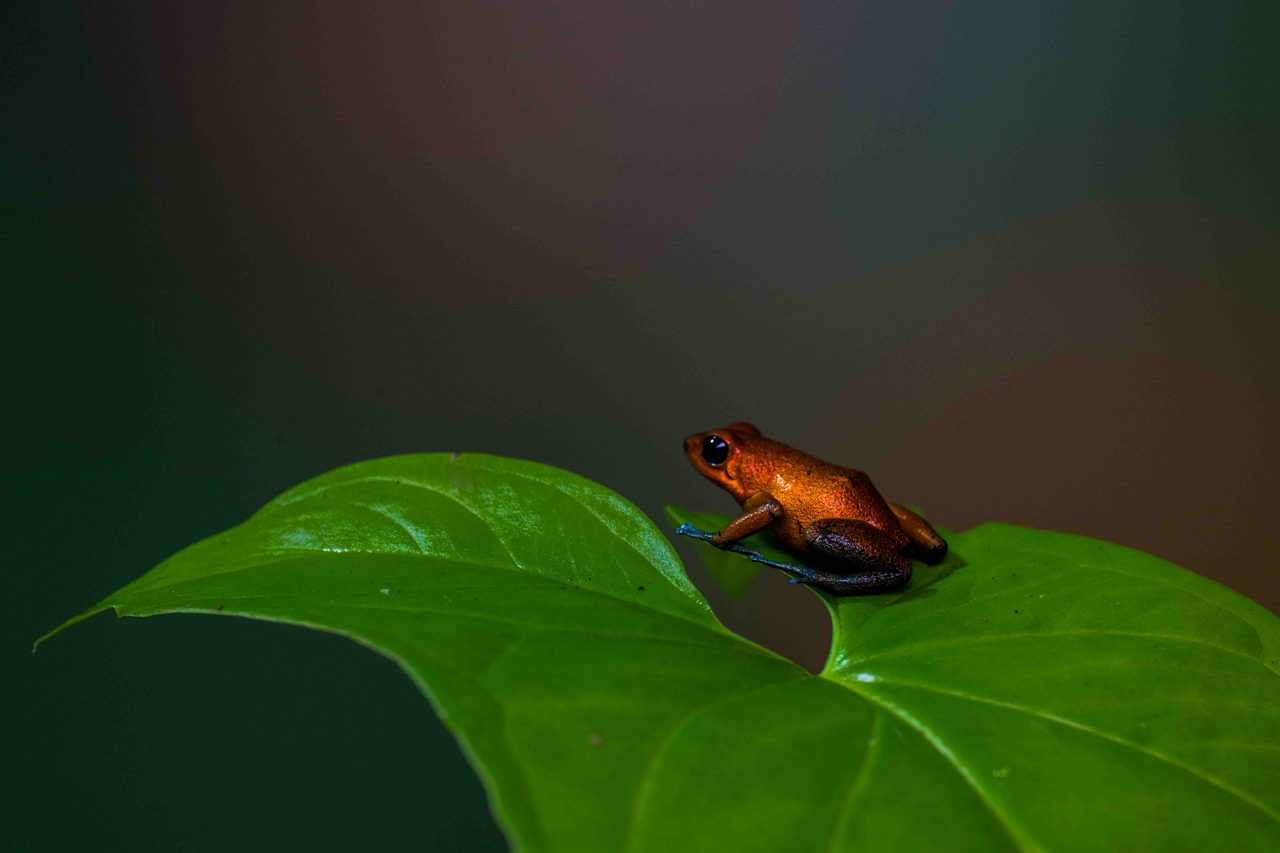
Costa Rica's magic is nocturnal — the best hours are after dark, in the rain, with a torch and a diffused flash.
The heart of it
Eleven Shots to Aim For
Not a wish list — a working one. Specific frames, each with the light it needs and the way to make it. Tick them off as you go.
01
The quetzal in flight
The Signature Shot
The quetzal in flight
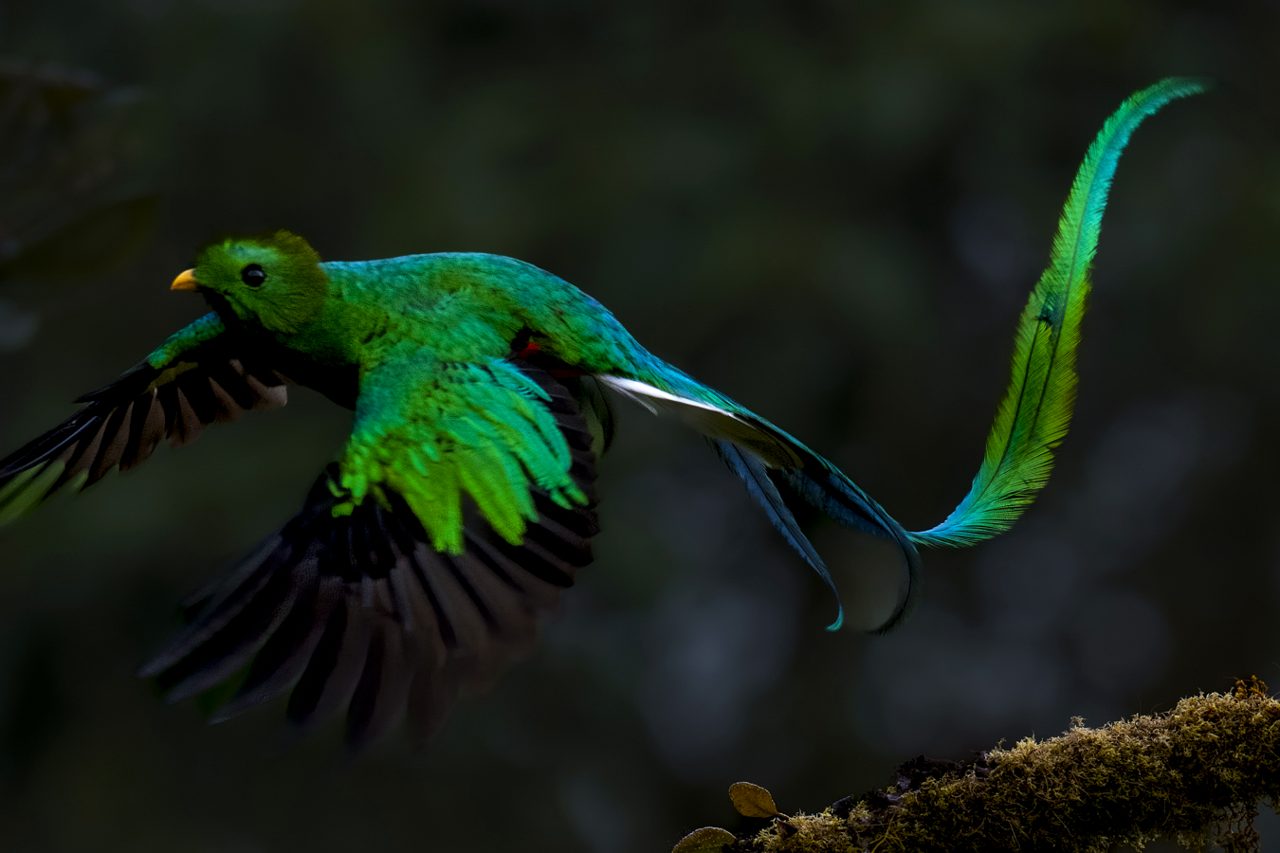
The bird the cloud forest is named for — a resplendent quetzal launching from its branch, the long tail streaming behind. The frame every photographer comes here hoping to make.
Fast tele · high shutter · pre-focus the perch
02
The jewel on the leaf
The Macro Shot
The jewel on the leaf
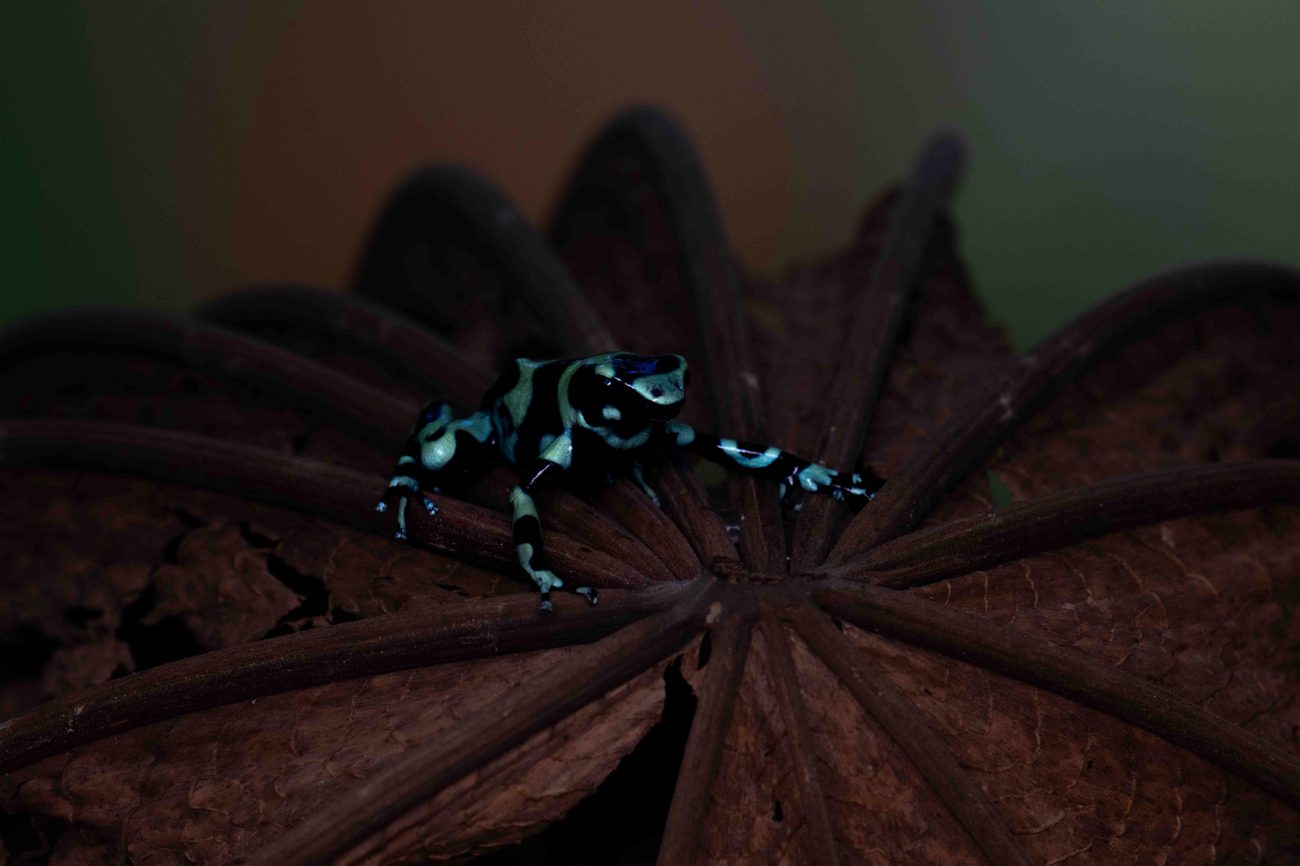
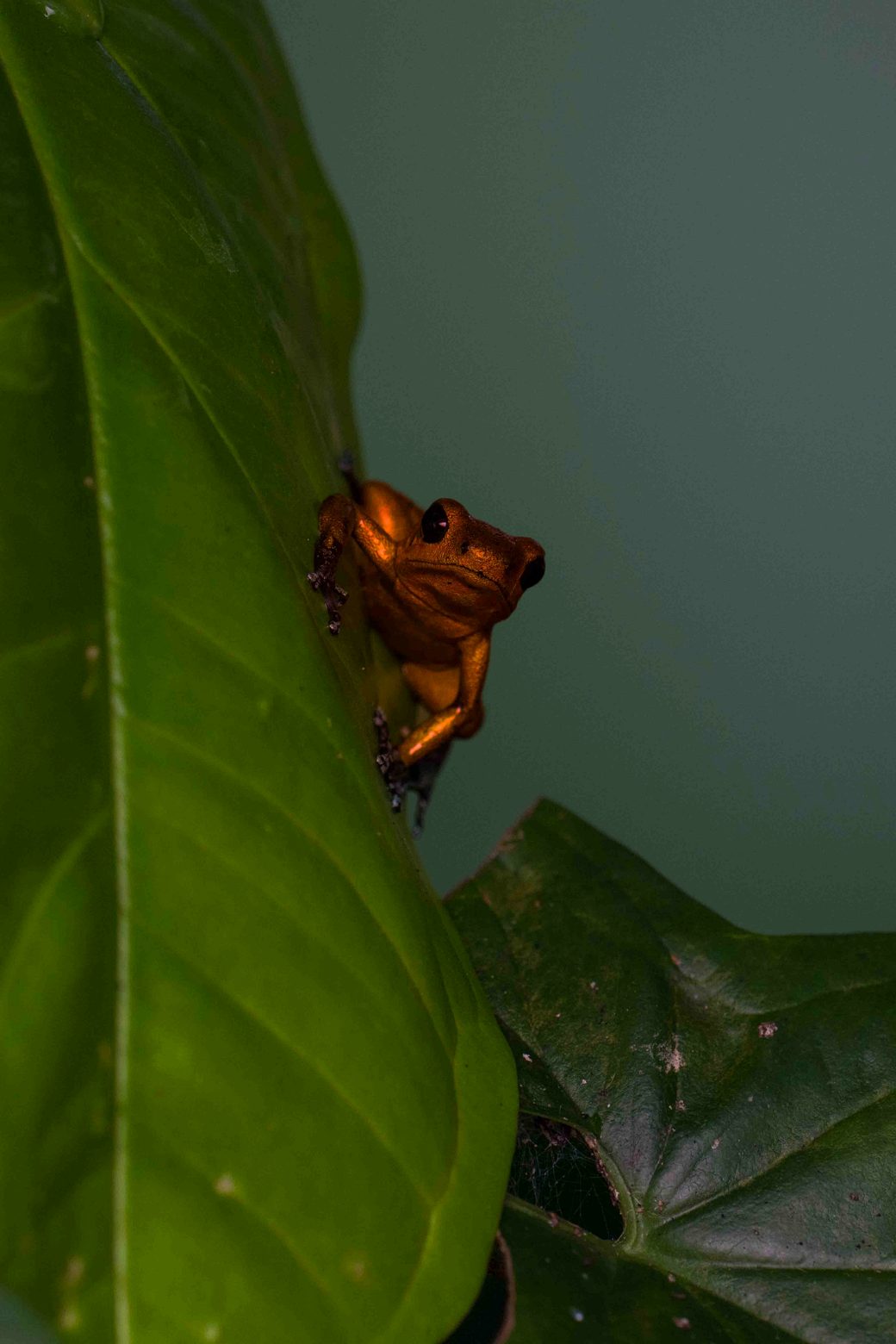
A strawberry poison dart frog, no bigger than a thumbnail, glowing on green. The forest floor is full of these — if you are willing to get down to it.
Macro · diffused flash · eye level · f/11
03
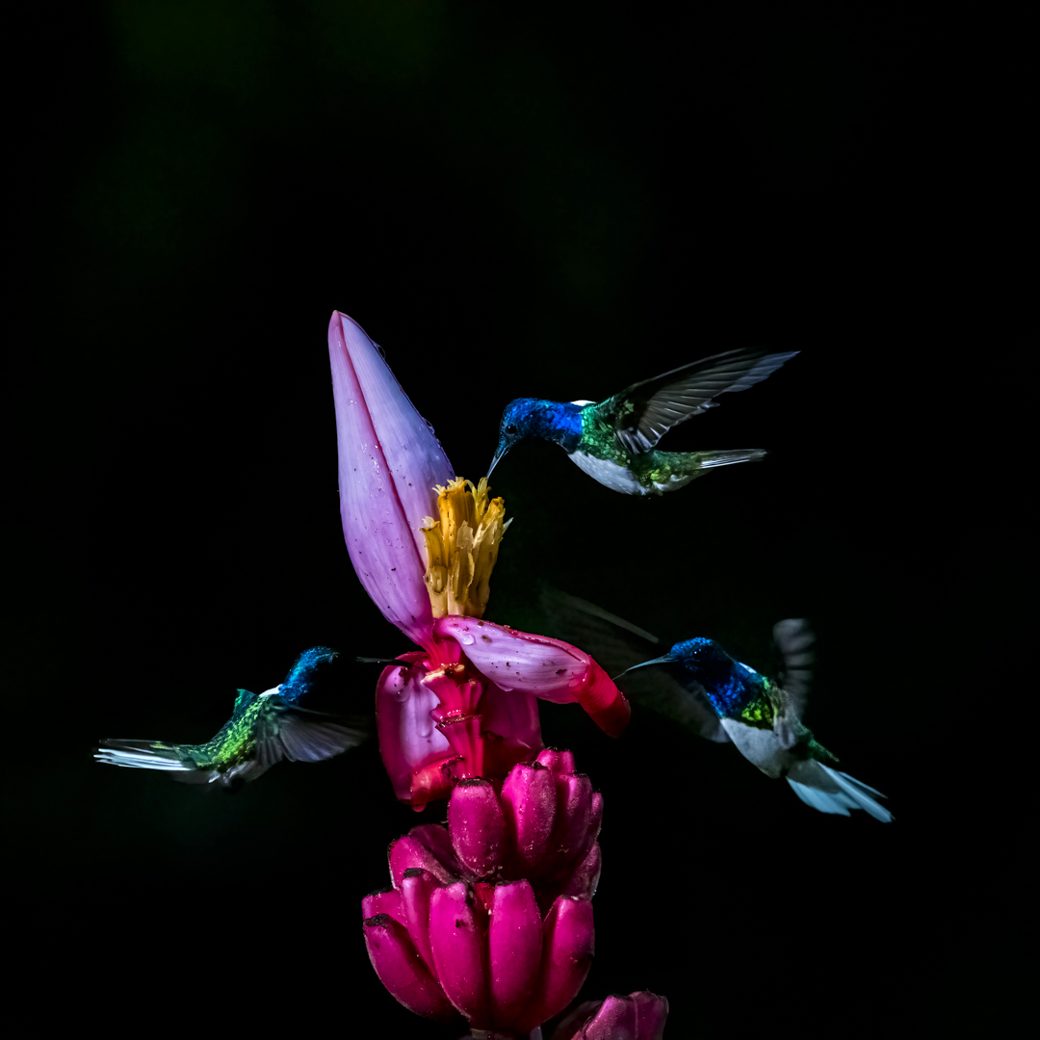
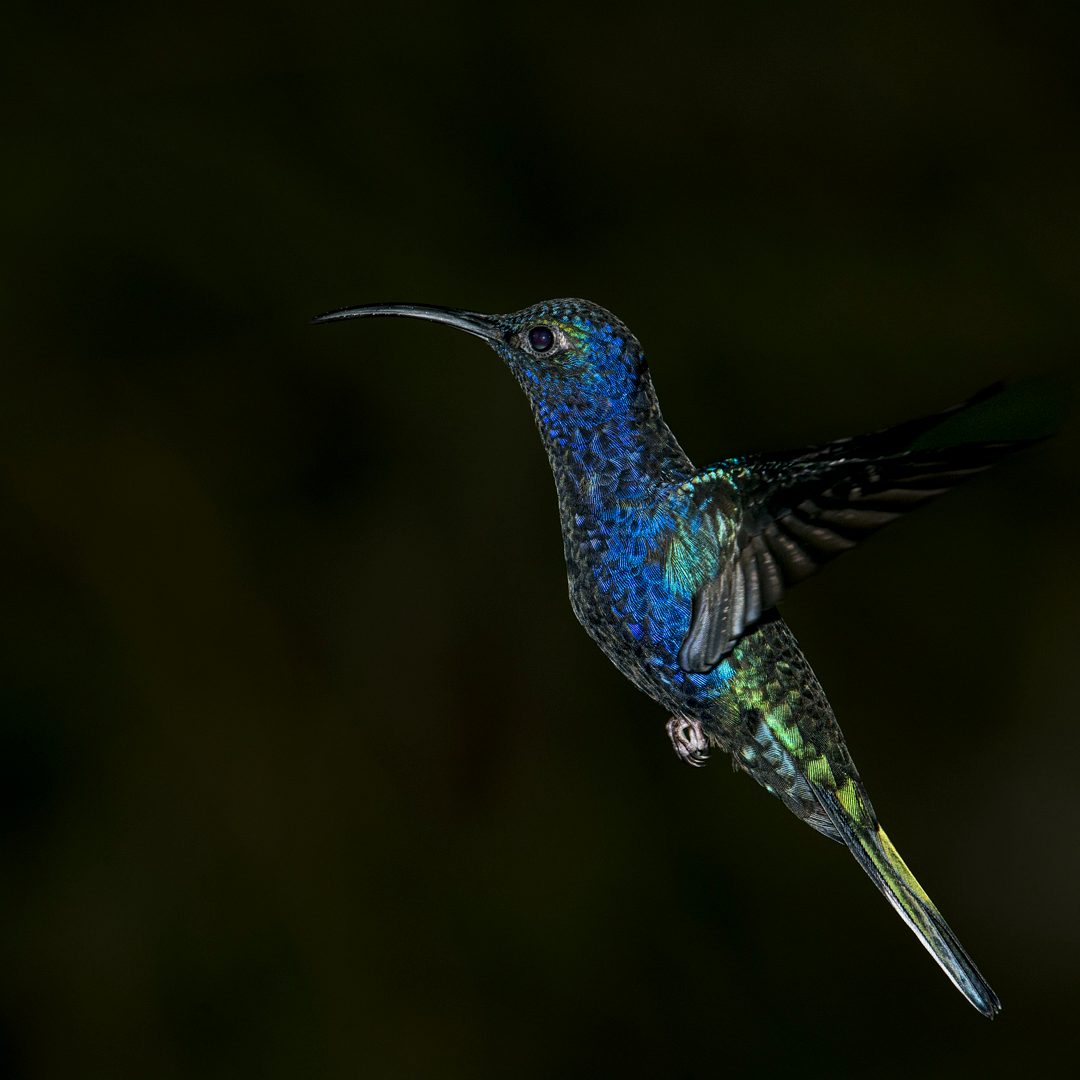
The hummingbird, mid-air
The Flight Shot
The hummingbird, mid-air
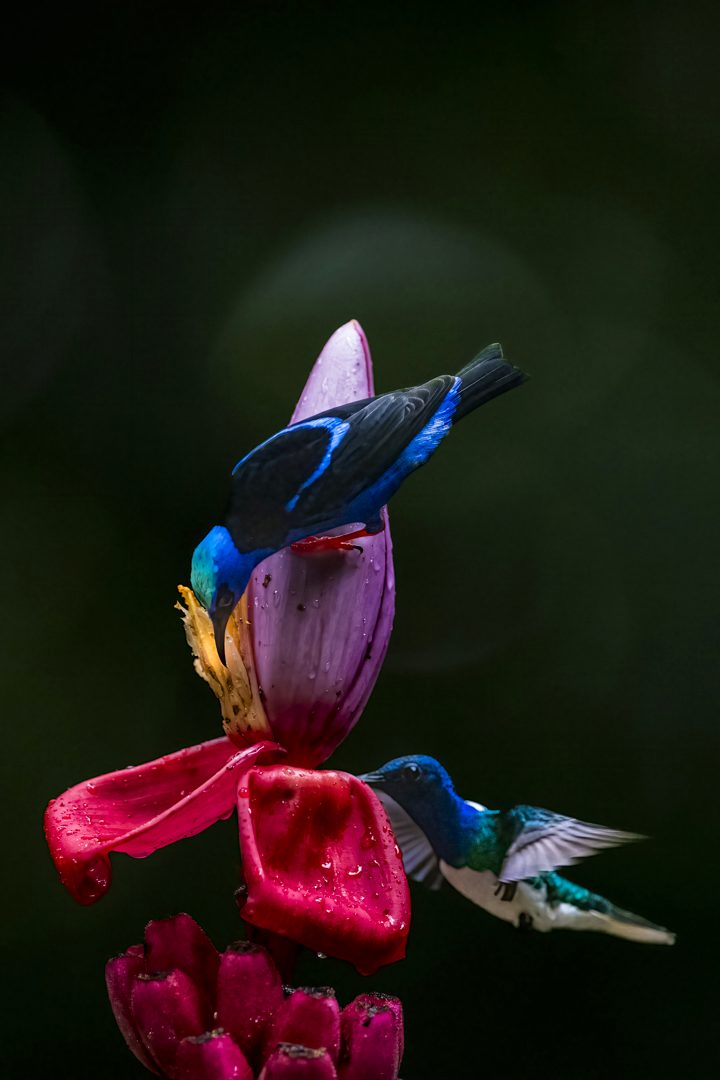
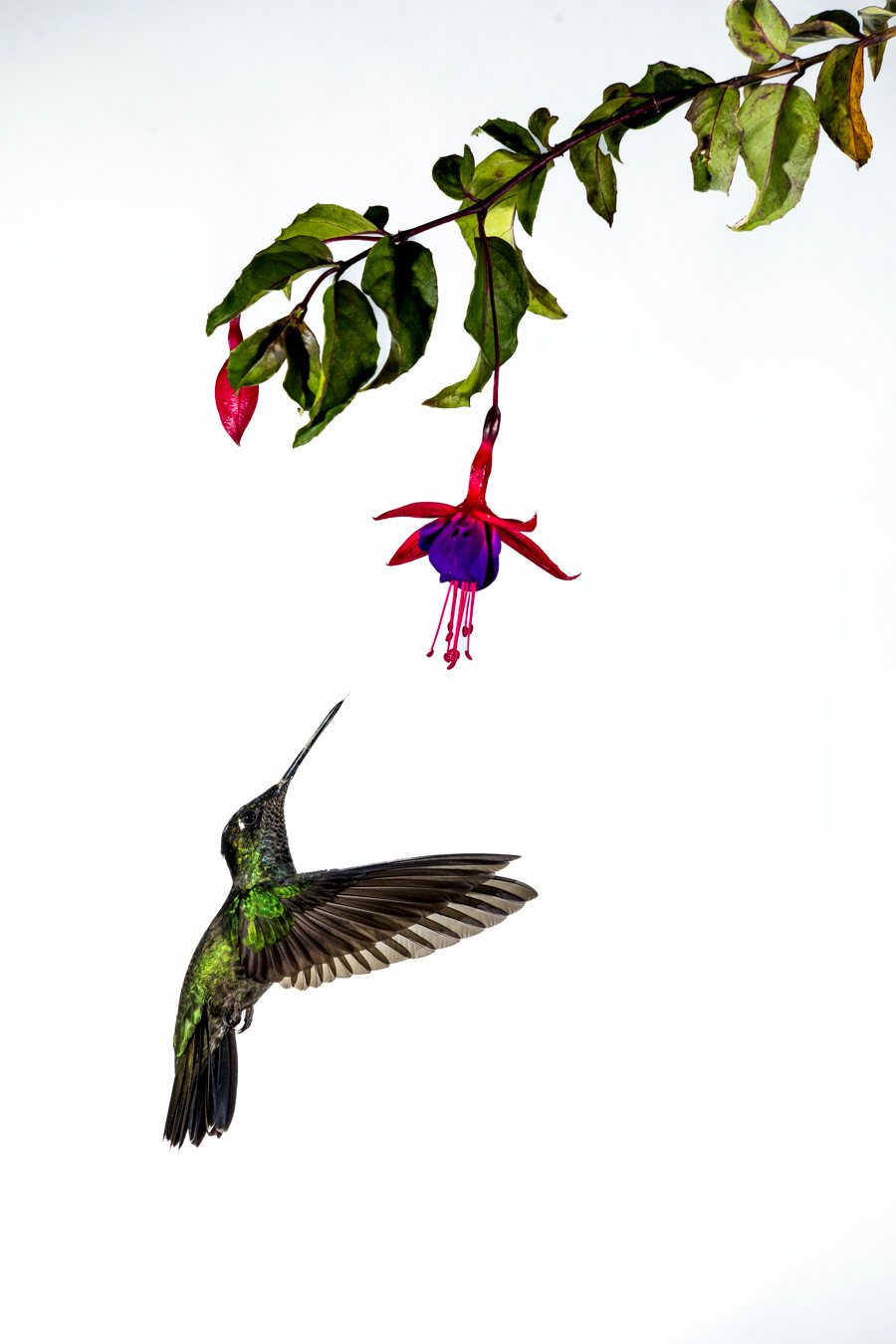
A single hummingbird held still in the air on pure black, wings open and gorget lit. Build the light and the perch first, then wait for the bird to fly into the frame you made.
Multi-flash rig · low power · welfare first · pre-set the light
04
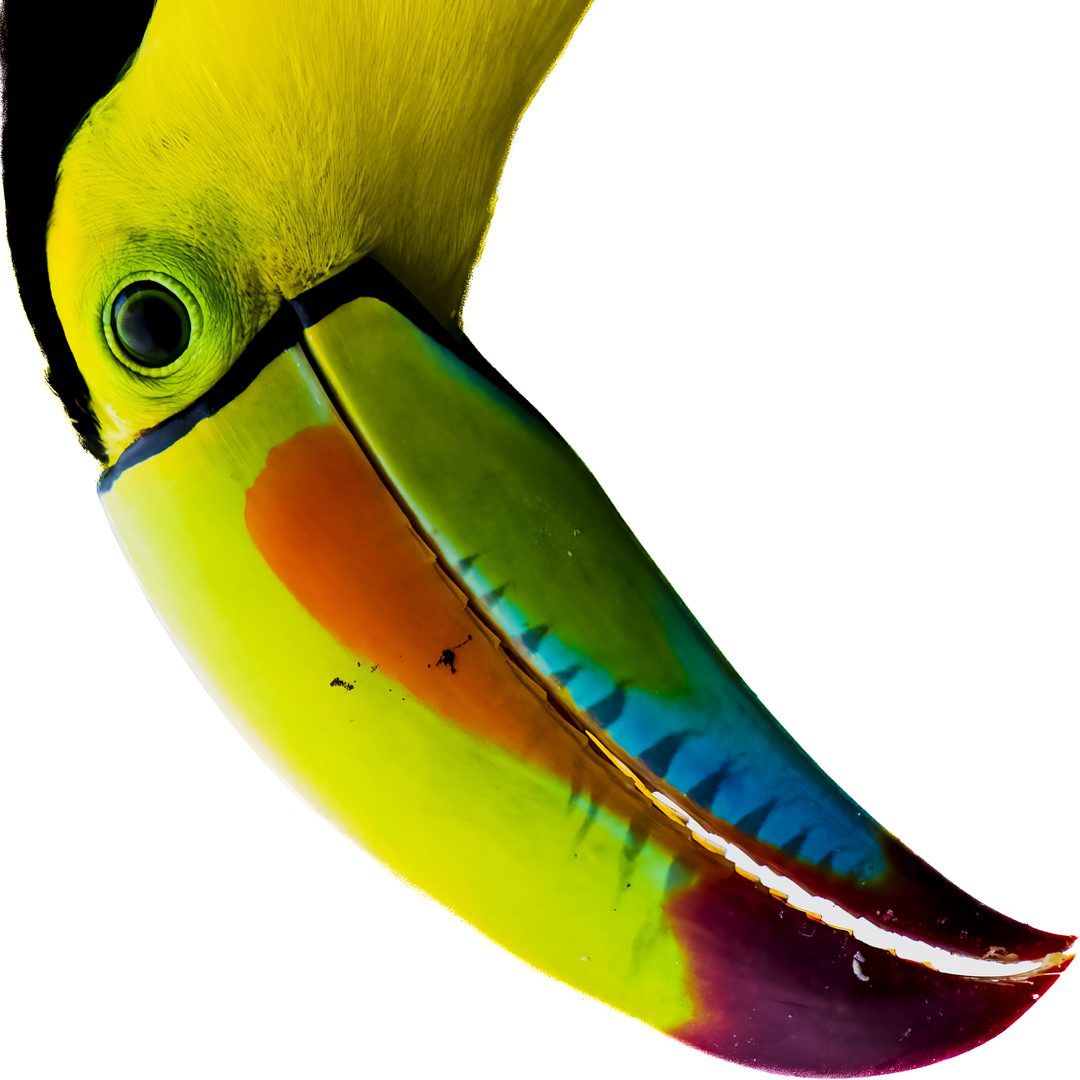
The rainbow bill
The High-Key Shot
The rainbow bill
A keel-billed toucan's bill against pure white — colour reduced to a clean, graphic shape. Expose for the bright and let everything else fall away.
High key · +1.7 EV · let the white go
05
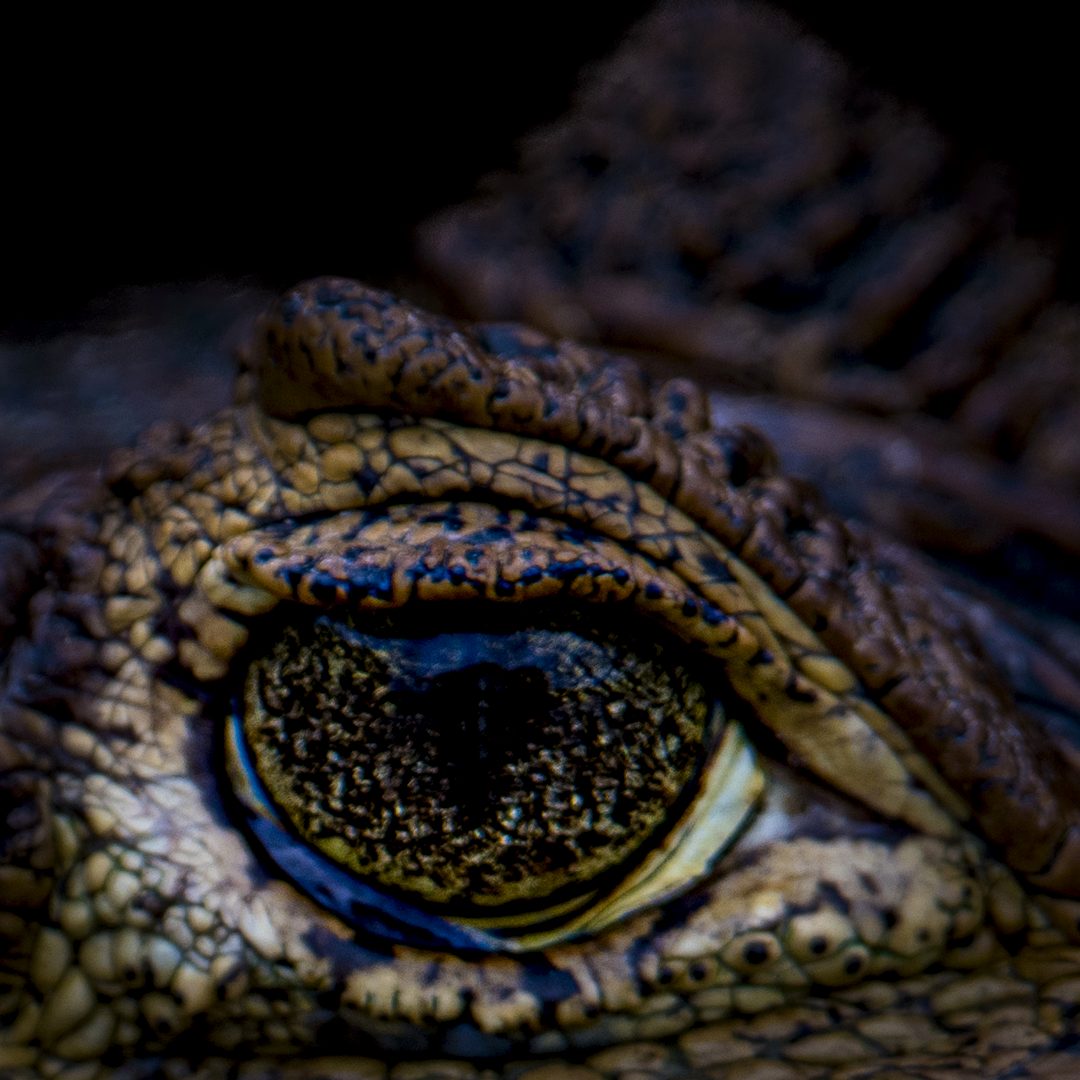
The dragon's eye
The Creative/Vision Shot
The dragon's eye
A spectacled caiman's eye, filled frame to frame — the slit pupil, the gold, the armour. Not a record of an animal, but a study of one.
Macro · careful light · fill the frame
06
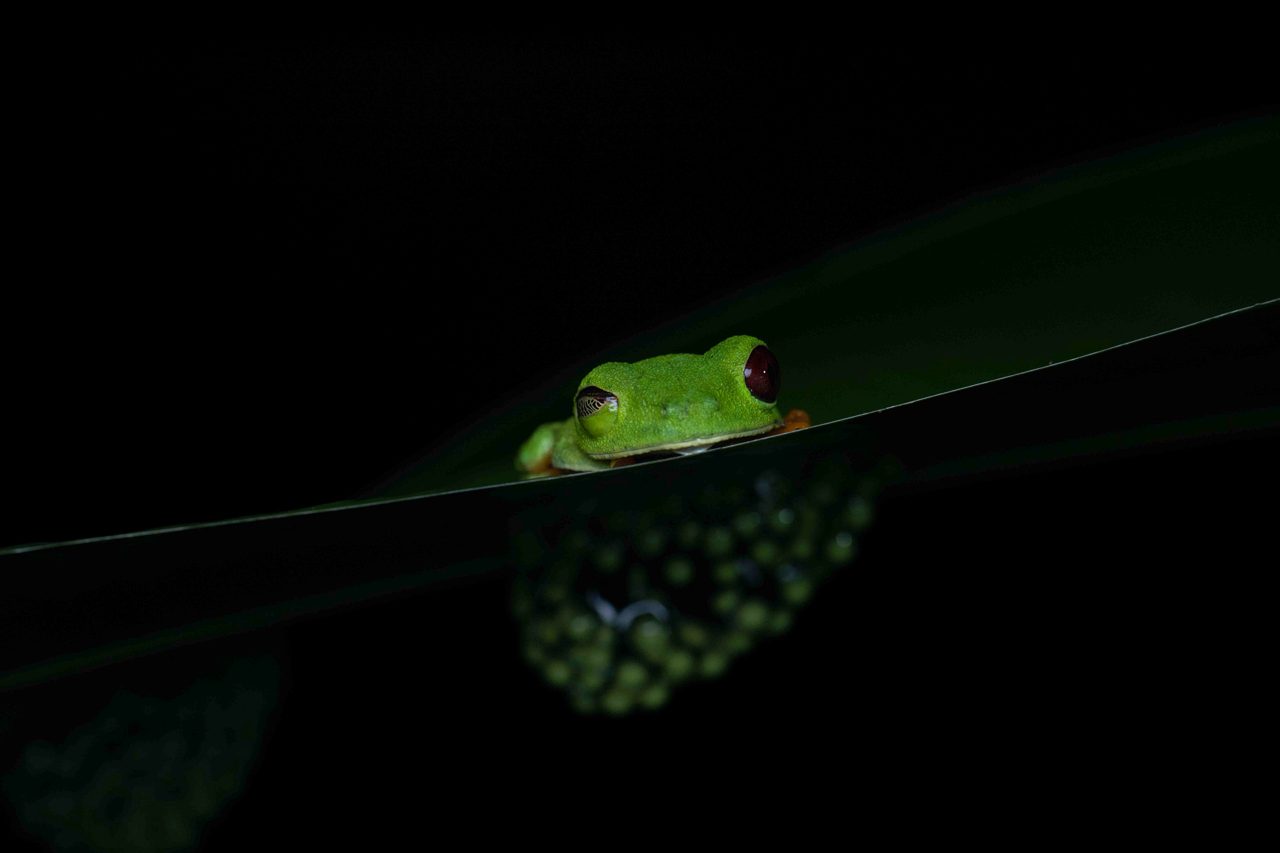
The night shift
The Element Shot
The night shift
A glass frog, translucent, lit from behind on a leaf above its eggs — the magic that only comes out after dark, in the wet. The night is the condition; the frog is the gift.
After dark · backlight · diffused fill
07
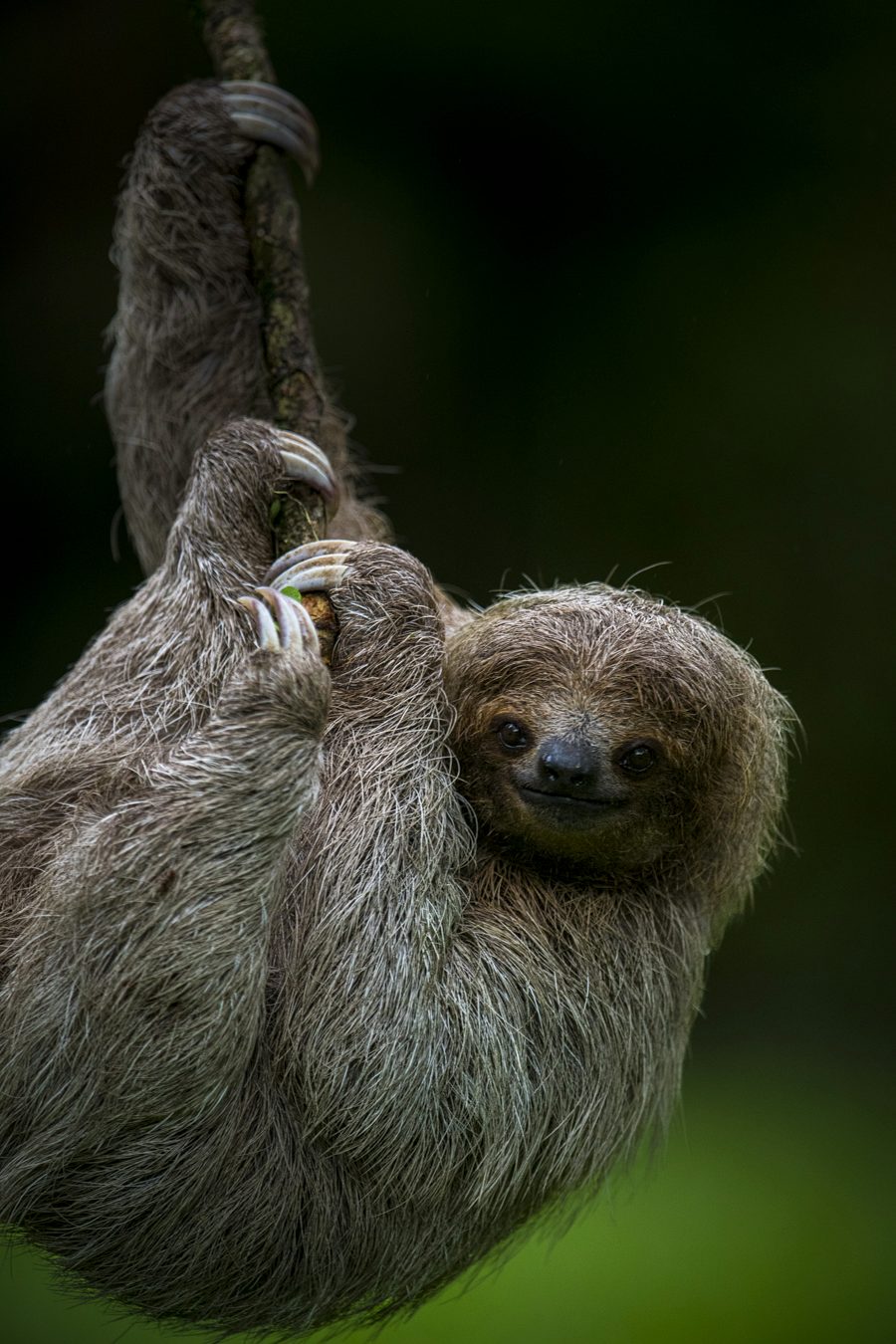
The slow life
The Habitat Shot
The slow life
A three-toed sloth folded into the canopy — Costa Rica's patron saint of stillness. Place it in its tree, and let the green hold it.
Long lens · clean canopy · patience
08
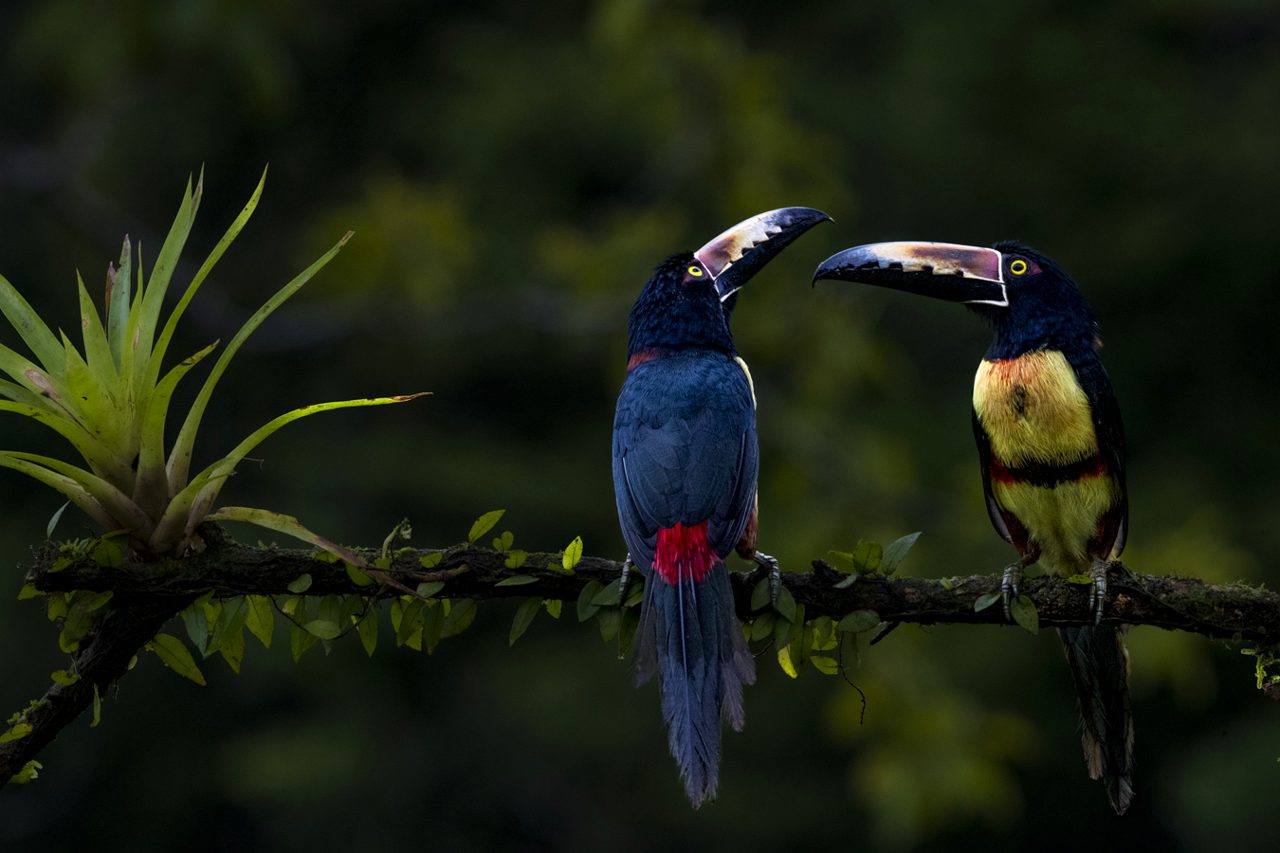
The pair
The Mr & Mrs Shot
The pair
Two collared aracaris facing on a mossy branch, a bromeliad between them — behaviour and company, not just a portrait of one.
Long lens · wait for the turn · soft light
09
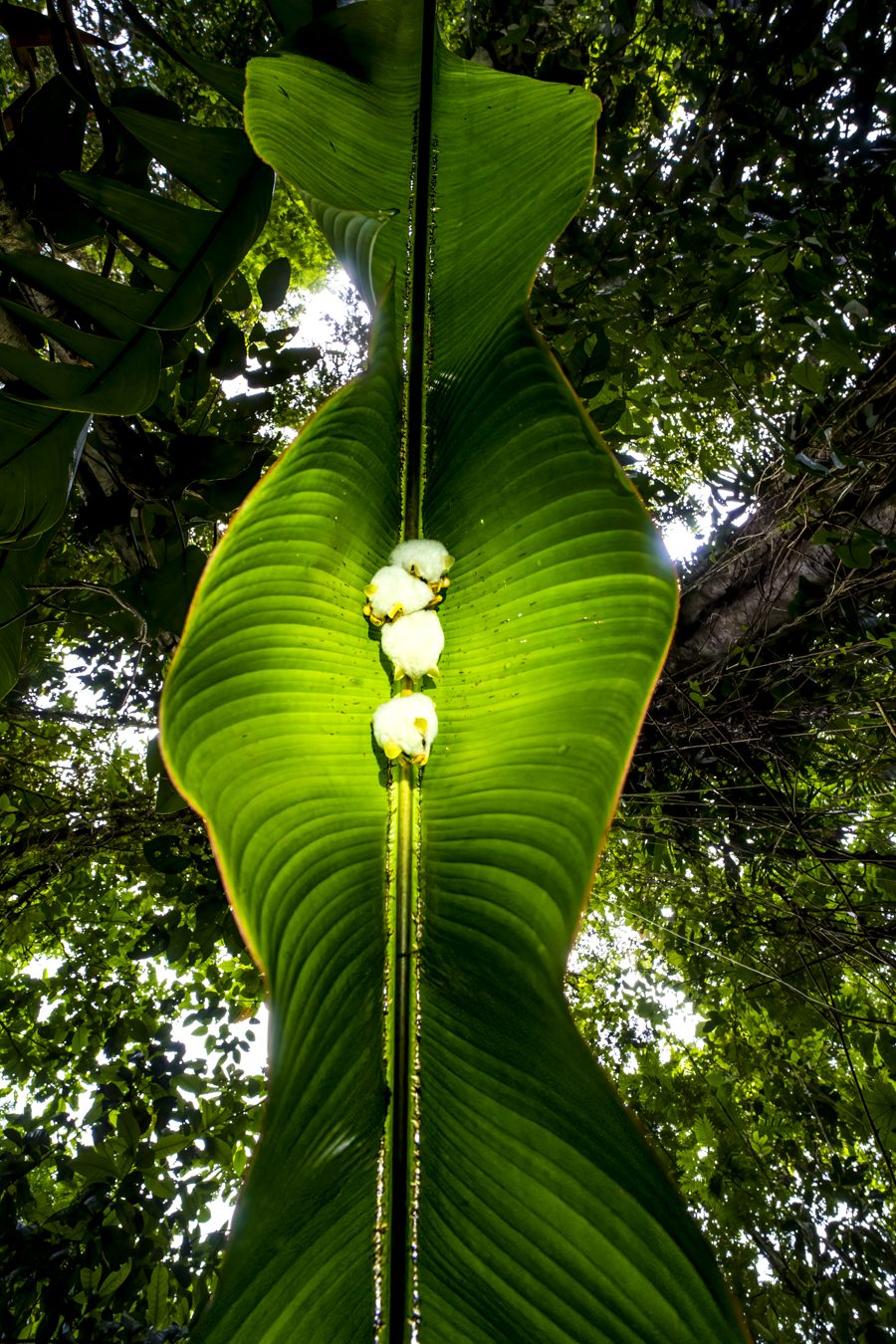
Bats under the leaf
The Wide-Angle Shot
Bats under the leaf
Not every story is a tight portrait. Tent-making bats sheltering beneath a heliconia leaf only make sense *wide* — the animals, their roof, and the forest rising behind. This is exactly why a wide lens never leaves the bag.
Wide angle · go close and low · balance flash with the canopy light
10
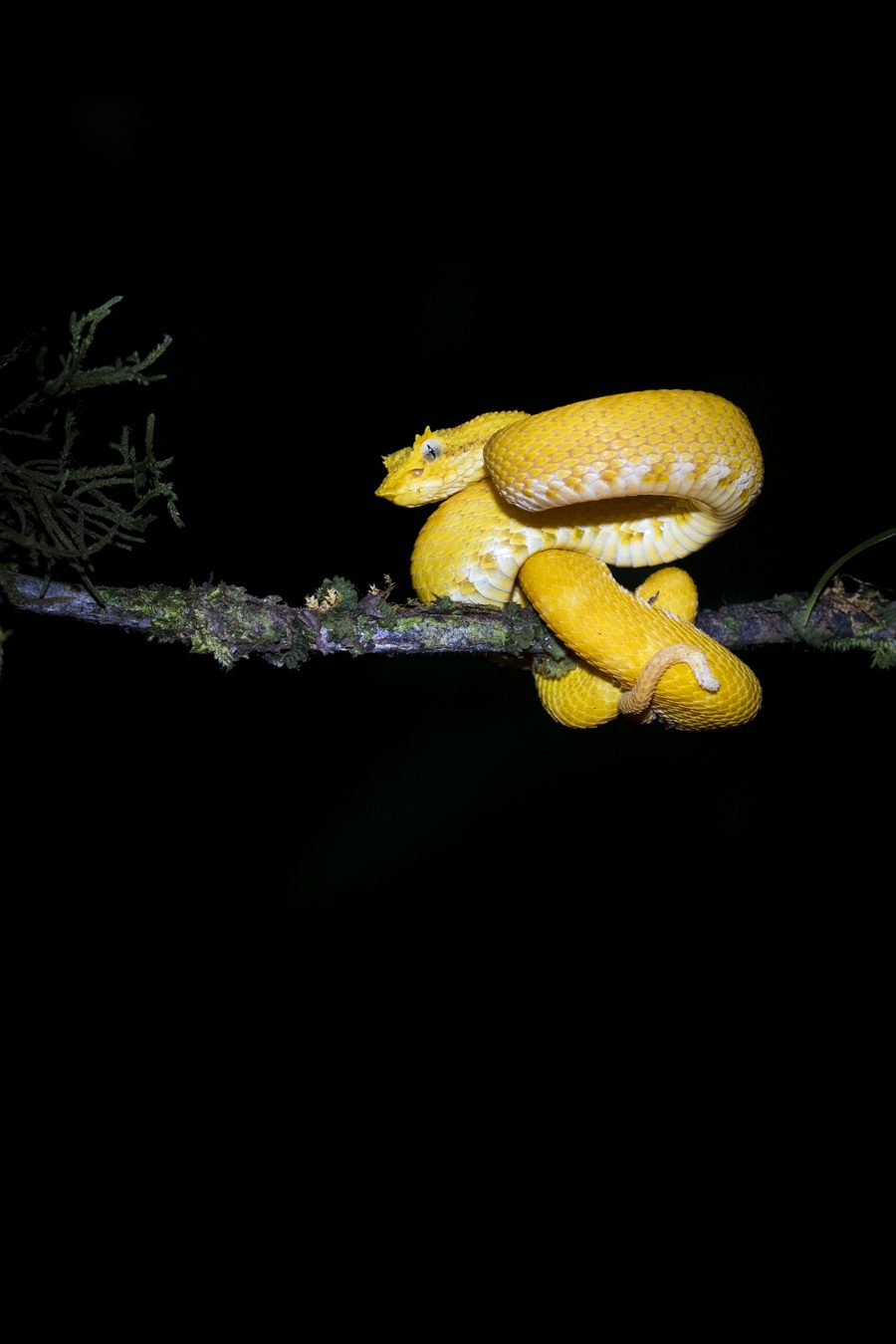
The waiting viper
The Low-Key Shot
The waiting viper
A yellow eyelash viper coiled on a branch, lifted from pure black — danger rendered as a single curve of gold. Light it small, let the dark do the rest.
Low key · spot of light · keep your distance
11
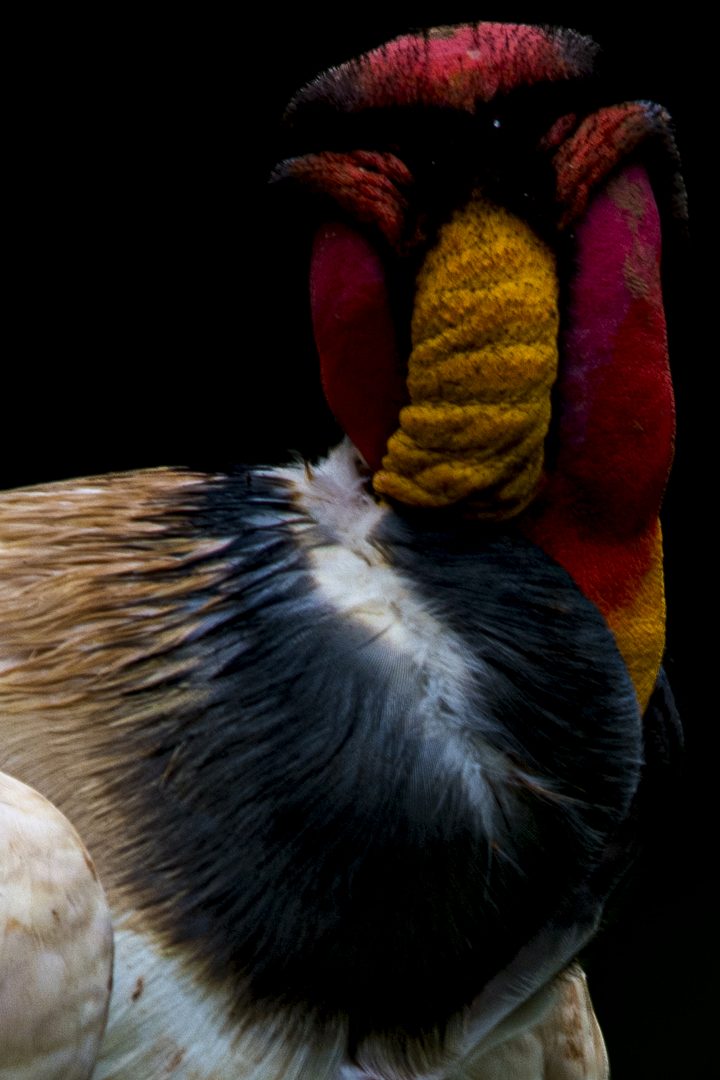
The king vulture
The Portrait Shot
The king vulture
Turned from the lens, he gives you his nape — a wash of orange, plum and ash bleeding into the soft grey ruff. A portrait need not show the eyes; it must show what makes the animal *itself*, and for the king vulture that is this extraordinary head.
Light the head only · black ground · the view no one expects
Go where others don't
Look down, and look after dark
Everyone leaves at dusk for the lodge. The maker stays, looks down, and looks closer — where the real Costa Rica lives.
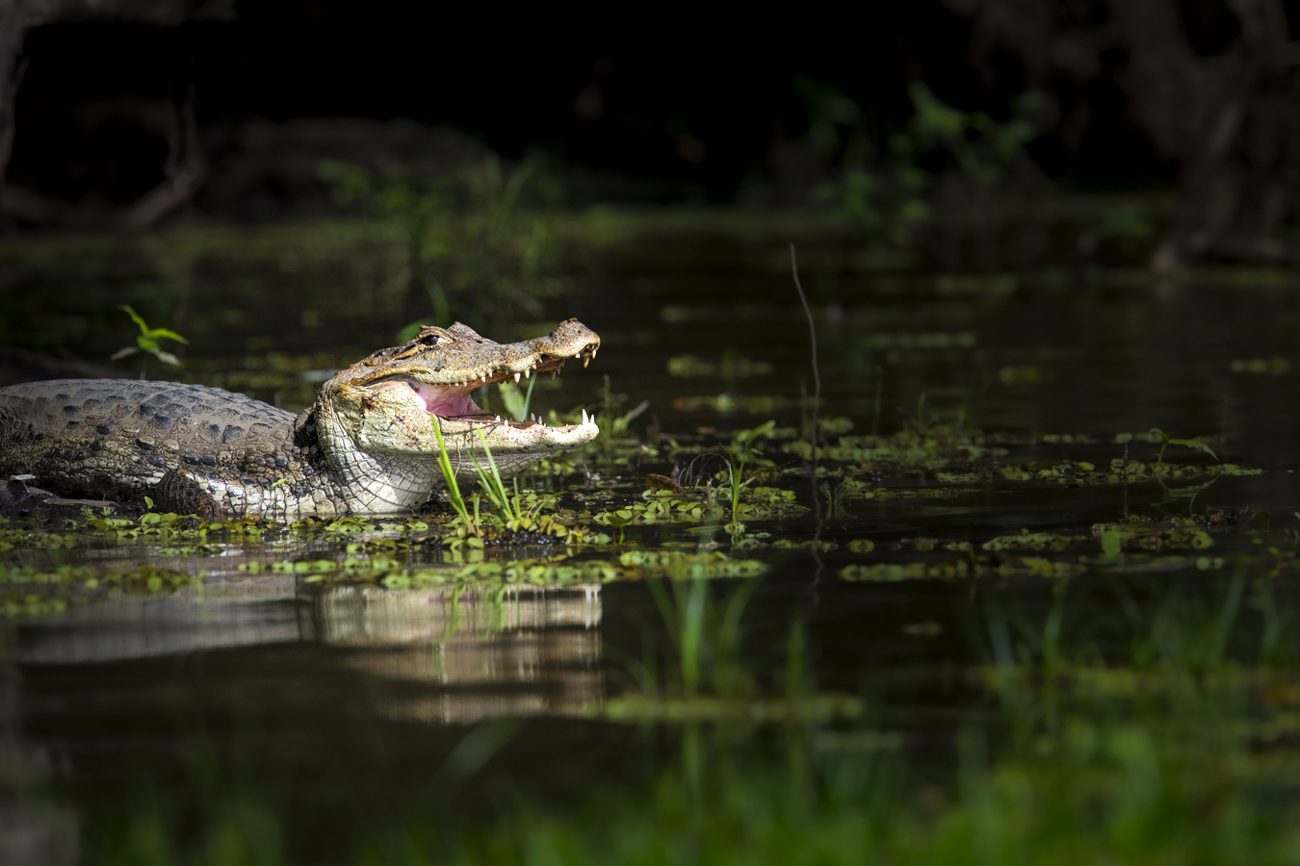
The dragon in the water
The dragon in the waterA spectacled caiman holding still in a black pool at night — the reptile most visitors never slow down to frame.
The art on the forest floor
The art on the forest floorA poison dart frog on a fallen seed-pod — the macro world day-trippers walk straight past on the way to the next bird.

Gear for this place

Pack for the small and the dark, not the distant

A macro lens and extension tubes for the forest floor — and above all a diffuser, a softbox of cloth over a small flash: the single thing that turns harsh light into a gentle wrap and separates a clean frog from a glaring one. A fast telephoto (100–400 / 500) for the quetzal and the canopy birds. A multi-flash flight rig if you mean to freeze a hummingbird's wings — built ethically, low power, the bird's welfare first. A sturdy tripod, a red-mode headlamp for the night walks, and serious rain protection for every body and lens. The rainforest eats gear that isn't sealed.

Questions to ask your guide

A good guide is half the making. Ask for the picture, by name, before you set out.
  • Can we work at night? The forest's best frames — the frogs, the glass frogs, the snakes — only come out after dark.
  • Do you know the quetzal's current nesting trees, and will you get us there at first light, before the crowds?
  • Are you comfortable with slow, patient macro work — waiting at one frog or one flower — rather than rushing a checklist?
  • Do the lodges run ethical hummingbird and feeder setups we can light properly, and do you respect flash limits for the birds' welfare?
  • Can we get low to the forest floor — and will you carry a diffuser and a spare light?
  • Which trails stay productive in heavy rain, so a wet day becomes our best day, not a lost one?
Field-readiness
There is no bad weather — only the wrong kit for it
The rain is when the forest performs, so don't hide from it — the wet, the heat, and the mud are the conditions, not the enemy. The critical few:
Rain, head to toeA real rain shell, dry bags, and rain-covers for every body and lens. A wet day is your best day — if your gear survives it.
Knee-high rubber bootsThe forest floor is mud and the frogs are low. Dry, sure feet keep you down there longer.
A diffuser & a spare flashThe single most important light you own here. Bring a backup — the soft source is what makes the macro sing.
A red-mode headlampFor the night walks — keep your night vision, and don't blow out a frog's eyes before you've framed it.
Silica & a sealed bagHumidity fogs lenses and grows mould. Dry your gear every single night.
Quiet, long sleevesFor the insects and the heat — and so you never spook the shy ones on the trail.
High key, on purpose: build the perch, balance the flashes, and wait — the hummingbird flies into the picture you made, the world bled to white behind it.
Respect comes first

The forest is fragile and the subjects are small. Never handle or relocate a frog or a snake for a photograph, never overlight an animal's eyes, keep flash low and brief, and stay on the trail. A glass frog's night matters more than your frame.
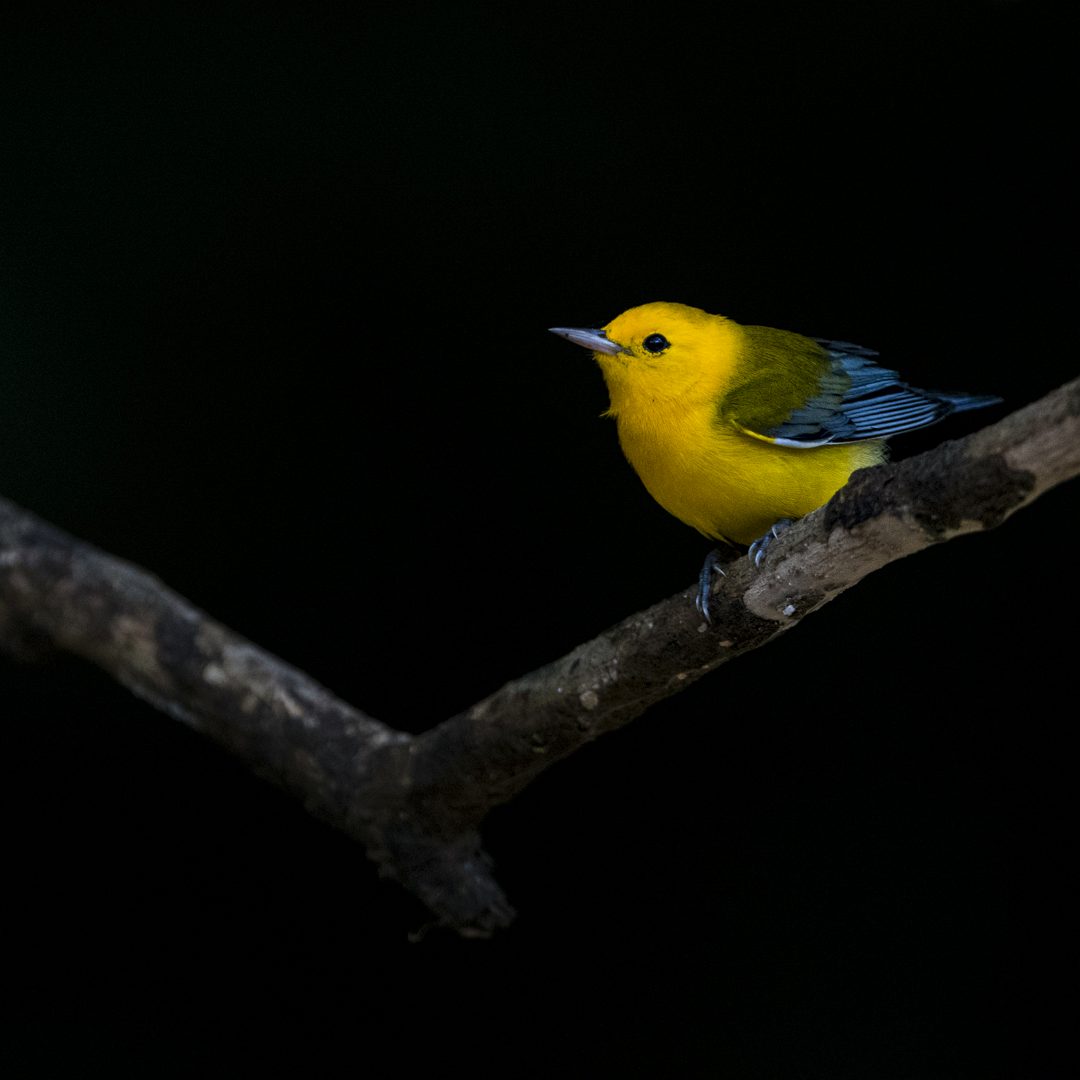
Make fewer, and better — and let the quiet ones count. One clean bird on black is worth a hundred hurried frames.
Explore

Plan your own location the same way

This is one of three guides we made by hand. Tell the planner any place on earth, and it builds you the same: ten shots, the conditions, the gear, the questions — a Field Brief to carry into the field.

Plan your location →
Pro & Premium · the Photo Trip Planner